
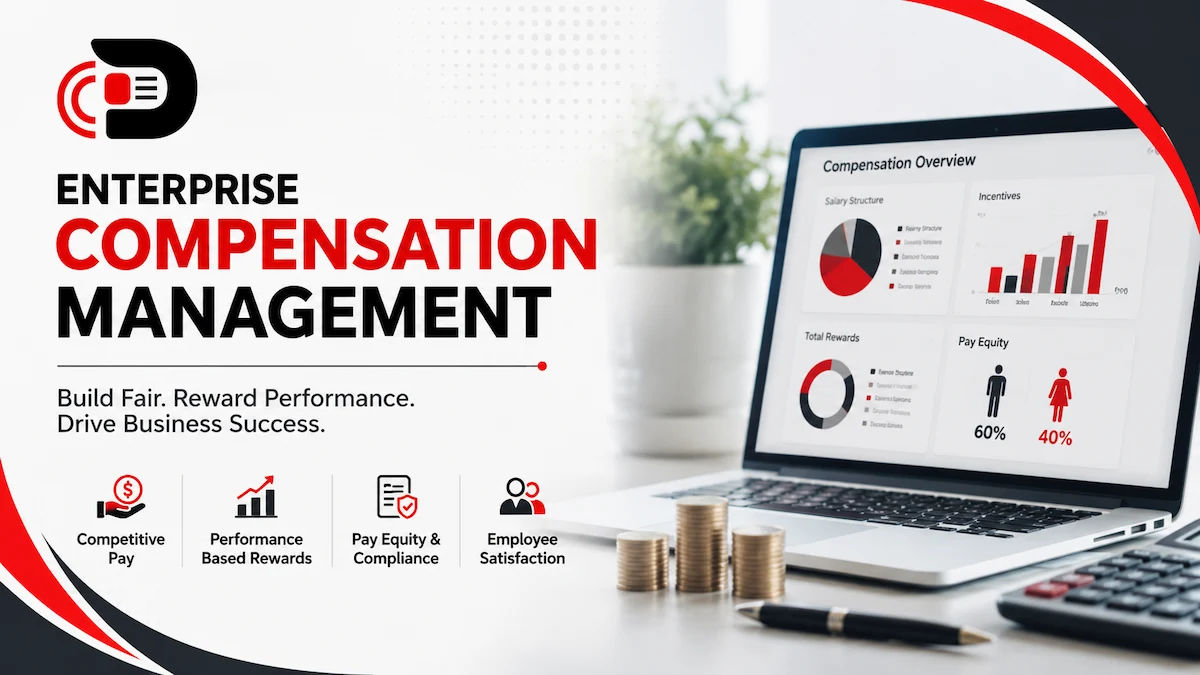

Compensation has always been more than just a paycheck. For employees, this reflects the value of their contributions. For employers, it serves as a powerful tool for attracting talent, retaining high-performing employees, and supporting business goals.
As organizations grow, managing their compensation becomes increasingly complicated. A company with a few dozen employees can often make informal salary decisions. A business with thousands of employees across multiple locations cannot do this. Differences in job roles, market conditions, performance expectations, and legal requirements create a level of complexity that demands a more structured approach.
Enterprise compensation management is essential.
By creating clear compensation strategies and using data to guide decisions, organizations can reward employees fairly while controlling labor costs. The result is a healthier workplace and stronger business.
Understanding Enterprise Compensation Management
Enterprise compensation management involves planning, managing, and optimizing employee pay across an organization. It includes salaries, bonuses, commissions, incentives, stock-based rewards, and benefits.
Unlike payroll, which focuses on paying employees accurately and on time, compensation management is more strategic in nature. It helps leaders determine how much employees should be paid and the reasons for it.
A well-designed compensation program helps answer questions such as:
- Are salaries competitive in the industry?
- Are employees rewarded fairly for their performance?
- Is there consistency across the departments and locations?
- Are compensation practices supportive of company objectives?
- Are pay decisions compliant with the employment regulations?
For large organizations, finding the right answers to these questions can significantly impact employee satisfaction and performance.
Why Compensation Management Has Become a Business Priority
The modern workforce has undergone significant changes. Employees have greater access to salary information than ever before, and many expect transparency in pay decisions.
Simultaneously, employers face growing competition for skilled professionals.
Consider a technology company attempting to recruit experienced software engineers. If their compensation packages fall below market expectations, top candidates may choose competitors. However, paying significantly above market rates without a clear strategy can increase costs and create internal pay disparities.
Effective enterprise compensation management helps organizations achieve the right balance.
When compensation programs are thoughtfully designed, companies often experience the following:
- Stronger employee retention
- Improved recruitment outcomes
- Higher workforce engagement
- Better performance alignment
- Greater trust in leadership
Poor compensation practices often produce the opposite results, leading to turnover, frustration, and reduced productivity.
The Building Blocks of Enterprise Compensation Management
Base Salary Structures
The base salary remains the foundation of employee compensation.
Organizations typically establish salary ranges based on several factors, including
- Job responsibilities
- Skills and qualifications
- Industry benchmarks
- Experience levels
- Geographic location
For example, a senior marketing manager in New York may command a higher salary than someone in the same role in a smaller market because of differences in living costs and local salary expectations.
Regular salary reviews help ensure that compensation remains competitive while maintaining internal fairness.
Performance-Based Incentives
Many organizations use incentives to encourage and reward high performance.
These incentives can take many forms.
- Annual bonuses
- Sales commissions
- Profit-sharing programs
- Project completion rewards
- Team-based incentives
Consider a sales team that exceeds its annual revenue target by 20%. Offering performance bonuses rewards achievement and reinforces behaviors that contribute directly to company success.
When designed correctly, incentive programs create a clear connection between efforts and rewards.
Equity Compensation and Long-Term Rewards
Many larger companies, particularly in the technology and high-growth industries, offer equity-based compensation.
This may include:
- Stock options
- Restricted stock units (RSUs)
- Employee stock purchase plans
These programs encourage employees to think beyond the short-term results. When workers have a stake in the company’s future, their interests become more closely aligned with the organization’s growth.
For instance, a startup may not be able to match the salaries offered by larger competitors. Equity compensation can help bridge this gap by providing employees with long-term earning potential.
Employee Benefits and Total Rewards
Compensation extends far beyond wages alone.
Today’s employees often evaluate opportunities based on the total rewards package, which may include the following:
- Health insurance
- Retirement plans
- Paid time off
- Wellness initiatives
- Professional development programs
- Tuition assistance
A company that offers excellent development opportunities and flexible work arrangements may remain highly attractive even if its salaries are only average in the market.
The Strategic Importance of Compensation Planning
Compensation planning involves more than deciding who receives a raise each year.
Organizations must balance employee expectations, business objectives and financial realities.
Factors That Influence Compensation Decisions
Human resources and business leaders often analyze the following:
- Company performance
- Industry salary data
- y.Labor market trends
- Economic conditions
- Employee performance metrics
For example, if cybersecurity professionals are in particularly high demand, organizations may increase salary budgets for those positions to remain competitive in the job market.
Without proper planning, companies risk losing their critical talents to competitors.
Managing Compensation Budgets
For many organizations, employee compensation represents their largest operating expenses.
Careful planning helps leaders to:
- Forecast future labor costs
- Allocate compensation budgets effectively
- Support profitability goals
- Avoid unnecessary spending
The challenge lies in balancing financial discipline with the need to reward and retain employees in the organization.
How Technology Is Transforming Compensation Management
Managing compensation manually can be difficult, especially in large enterprises with thousands of employees.
Modern compensation management platforms simplify the process by providing tools for
- Salary planning
- Budget forecasting
- Market benchmarking
- Compensation analytics
- Pay equity reporting
- Workflow automation
Instead of relying on spreadsheets scattered across departments, leaders can access centralized data that support more consistent decision-making.
The Value of Data-Driven Decisions
Data play an increasingly important role in compensation strategies.
Organizations can now analyze the following:
- Salary competitiveness
- Retention risks
- Internal pay gaps
- Promotion trends
- Compensation effectiveness
For example, if the data reveal that employees in a specific department consistently leave after two years, compensation leaders can investigate whether pay levels contribute to turnover.
This type of insight helps organizations address issues before they become larger problems.
Pay Equity: A Growing Focus for Employers
Pay equity has become one of the most important topics in compensation-management research.
Employees, regulators, and investors increasingly expect organizations to demonstrate fairness in their compensation practices.
Pay inequities can damage employees’ trust and expose companies to legal and reputational risks.
Steps Organizations Take to Improve Pay Equity
Many businesses now:
- Conduct compensation audits
- Review salary ranges regularly
- Analyze compensation gaps
- Standardize pay practices
- Increase transparency around compensation decisions
These efforts help ensure that employees performing comparable work receive equitable compensation for their work.
Beyond compliance, fair pay practices contribute to a stronger workplace culture.
Common Challenges in Enterprise Compensation Management
Even the most sophisticated organizations face challenges in compensation.
Managing a Global Workforce
Companies operating internationally must navigate the following:
- Local labor laws
- Tax regulations
- Currency fluctuations
- Regional compensation expectations
A compensation package that works well in one country may not be effective in another country.
Balancing Internal and Market Equity
Organizations must constantly balance two competing priorities.
First, employees performing similar work should receive fair internal compensation.
Second, salaries must remain competitive in the external job market.
Maintaining both forms of equity requires ongoing analyses and adjustments.
Responding to Economic Shifts
Inflation, labor shortages, and economic uncertainty can rapidly alter compensation expectations.
Employers must remain flexible enough to adapt while maintaining their financial stability.
Almawadahit .com USA: Exploring a Growing Hub for Technology and Digital Insights
Emerging Trends Shaping Compensation Strategies
The compensation landscape is continuously evolving.
Greater Pay Transparency
Many organizations are becoming more open to salary ranges and compensation practices.
Transparency can:
- Build employee trust
- Improve candidate experiences
- Reduce compensation-related misunderstandings
Skills-Based Pay Models
Companies are increasingly rewarding employees for their valuable skills rather than focusing solely on job titles.
For example, employees who develop expertise in cloud security or data analytics may receive additional compensation even without formal promotion.
Personalized Rewards
Not all employees value the same benefits.
Some may prefer additional vacation time, whereas others prioritize professional development opportunities or flexible schedules.
Organizations are responding by offering personalized reward options.
Real-Time Compensation Insights
Instead of waiting for annual reviews, many businesses continuously monitor compensation data.
This allows leaders to identify trends and make adjustments more quickly when market conditions change.
Best Practices for Effective Enterprise Compensation Management
Organizations that consistently succeed in compensation management often follow several key principles.
Develop a Clear Compensation Philosophy
Employees should understand how compensation decisions are made and the factors that influence pay.
Use Reliable Market Data
Regular benchmarking helps to ensure that salaries remain competitive.
Focus on Fairness
Consistency and transparency reduce perceptions of bias and strengthen employees’ confidence.
Invest in Technology
Modern compensation tools improve efficiency and support better decision making.
Communicate Openly
Employees are more likely to trust compensation programs when leaders explain the reasoning behind their pay decisions.
Review Strategies Regularly
Compensation plans should evolve as business goals, workforce requirements, and market conditions change.
FAQs
1. What is enterprise compensation management?
Enterprise compensation management is a strategic process of planning, administering, and optimizing employee pay, incentives, benefits, and rewards across an organization.
2. How does compensation management differ from payroll?
Payroll focuses on processing employee payments accurately and on time, whereas compensation management focuses on determining pay levels, reward strategies, and compensation planning.
3. Why is compensation management important for retaining employees?
Employees are more likely to remain with organizations that provide fair, competitive, and transparent compensation.
4. What role does technology play in compensation management?
Technology helps automate planning, budgeting, reporting, benchmarking, and compensation analysis, making these processes more accurate and efficient.
5. What are the biggest trends in enterprise compensation management?
Key trends include pay transparency, skill-based compensation, personalized rewards, pay equity initiatives, and real-time compensation analytics.
Conclusion
Enterprise compensation management has evolved into a critical business function that influences recruitment, retention, employee engagement and organizational success.
Companies can no longer rely solely on simple salary structures or annual pay reviews. Today’s workforce expects fairness, transparency, and meaningful rewards that reflect both performance and market realities.
Organizations that combine thoughtful planning, reliable data, modern technology, and a commitment to pay equity are better positioned to attract top talent and maintain a motivated workforce. In an increasingly competitive labor market, effective compensation management is not just an HR responsibility; it is a strategic advantage.