
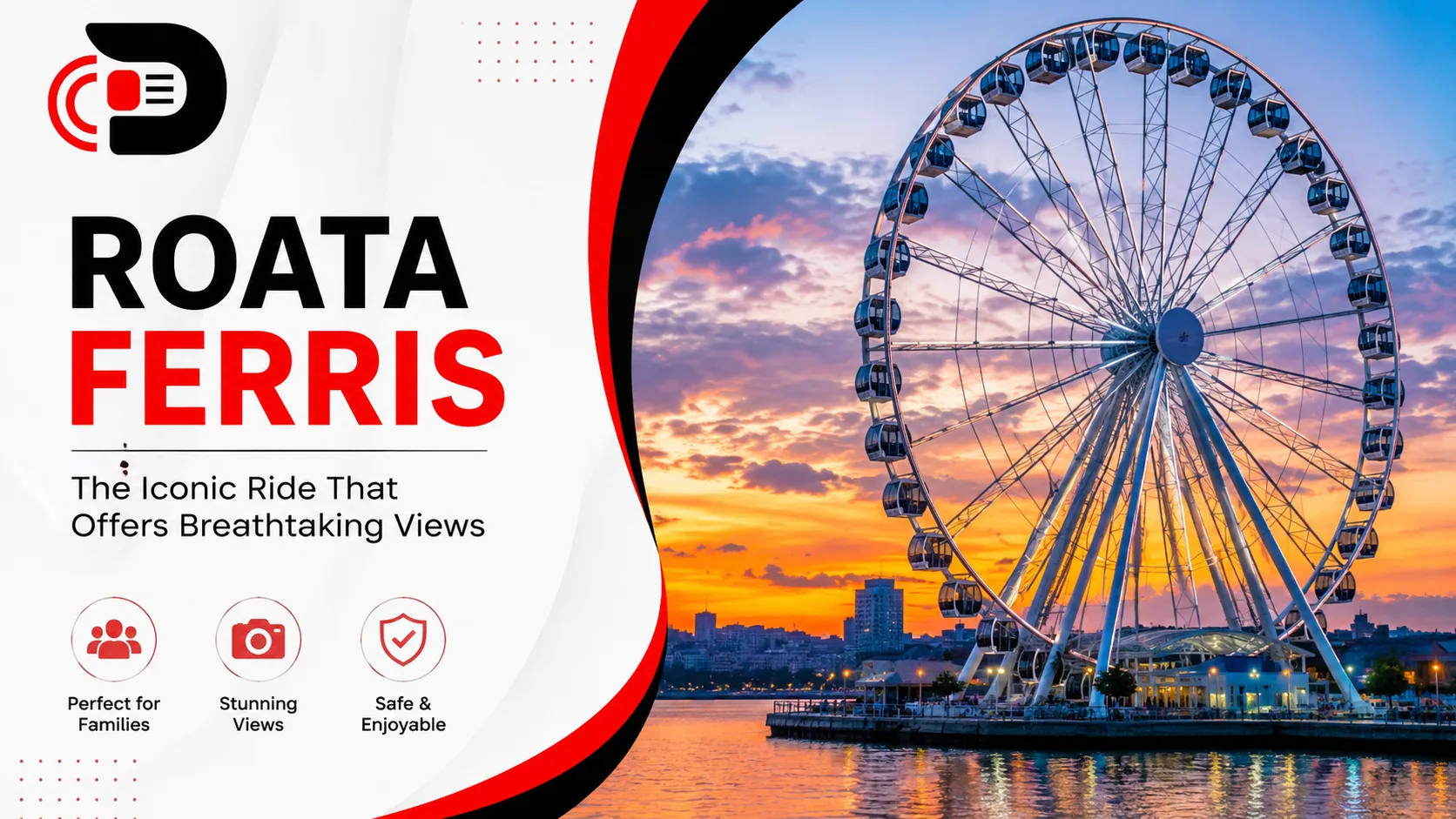

Introduction Roata Ferris
Few attractions are as instantly recognizable as the roata ferris, better known around the world as the Ferris wheel. Whether it stands above a busy city center, overlooks a sandy coastline, or lights up a local fairground, this giant rotating structure draws people in.
Its appeal lies in its simplicity. Unlike high-speed roller coasters that deliver a rush of adrenaline, a Ferris wheel offers something different: a chance to slow down and enjoy the view. Families can ride together, couples can share a quiet moment above the city lights, and tourists can view a destination from an entirely new angle.
Today, Ferris wheels are much more than just amusement rides. In many cities, they have become iconic landmarks that contribute to tourism, local business growth, and the overall identity of the destination.
The Origins of the Roata Ferris
The history of the roata ferris dates back to the late 1800s. It was created by American engineer George Washington Gale Ferris Jr., who designed the first Ferris wheel for the 1893 World’s Columbian Exposition in Chicago.
At the time, event organizers wanted an attraction that could match the impact of the Eiffel Tower, which had captured global attention a few years earlier. Ferris proposed a massive steel wheel that would lift visitors high above the fairgrounds and offer views unlike anything people had experienced before.
The original structure was an engineering marvel of its era. It stood approximately 264 feet tall and featured 36 large passenger cars capable of carrying over 2,000 people during a single rotation.
The visitors were fascinated. Long lines formed throughout the exhibition, and the attraction quickly became one of the event’s biggest successes. Its popularity paved the way for the appearance of Ferris wheels in amusement parks and public spaces across the globe.
How a Roata Ferris Works
At first glance, a Ferris wheel may seem like a simple ride. In reality, it relies on carefully engineered systems that work together to ensure safety and comfort.
Key Components
A modern roata ferris typically includes the following:
- A central hub and axle
- Heavy-duty steel supports
- Passenger cabins or gondolas
- Electric motors and drive mechanisms
- Computerized monitoring systems
As the wheel rotates, passenger cabins remain upright. This is achieved through specially designed pivot systems that allow the cabins to remain level while the wheel turns.
For example, when riding the London Eye, one may notice that their cabin remains stable even as the wheel continues its slow rotation. This stability is the result of precise engineering rather than chance.
Premiekalkulator V75: A Practical Guide to Calculating Costs and Improving Your Betting Strategy
Built With Safety in Mind
Safety is a top priority for ferris wheel operators worldwide. Modern installations include multiple layers of protection, such as
- Backup braking systems
- Continuous sensor monitoring
- Emergency power supplies
- Weather tracking systems
- Scheduled maintenance inspections
Because of these measures, ferris wheels are generally considered among the safest attractions at amusement parks and tourist destinations.
Why Ferris Wheels Remain So Popular
Although countless new rides have been introduced over the years, the Ferris wheel continues to attract visitors. Its appeal extends far beyond simple entertainment.
Incredible Views
One of the biggest reasons people ride a Ferris wheel is for the scenery.
From the top, riders can see landmarks, skylines, waterfronts, and natural landscapes that are impossible to appreciate from the street level. In cities such as London, Singapore, and Las Vegas, many visitors consider Ferris wheel rides to be an essential part of their trip.
Photography enthusiasts particularly enjoy the opportunity to capture unique aerial perspectives.
Suitable for Almost Everyone
Many amusement rides have height restrictions or intense movements that make them unsuitable for certain visitors. Ferris wheels are different.
They are often enjoyed by:
- Families with young children
- Couples
- Tourists
- Older adults
- First-time amusement park visitors
This broad accessibility helps explain why ferris wheels continue to appeal to multiple generations.
A Relaxing and Romantic Experience
There is something memorable about watching the sunset from a slowly moving observation wheel.
Many modern attractions have embraced this appeal by offering private cabins, dinner packages, and evening rides with stunning views of the city. In destinations such as Las Vegas and London, Ferris wheel rides have become popular choices for proposals, anniversaries, and special celebrations.
Famous Roata Ferris Attractions Around the World
Some Ferris wheels have grown beyond their role as amusement rides and have become internationally recognized landmarks.
The London Eye, located on the banks of the River Thames, offers spectacular views of the historic and modern landmarks of London.
The High Roller in Las Vegas is among the tallest observation wheels in the world and provides panoramic views of the famous Strip, particularly impressive after dark when the city lights come alive.
The Singapore Flyer provides visitors with a sweeping view of Marina Bay, the downtown skyline, and even neighboring islands on clear days.
These attractions demonstrate how a Ferris wheel can evolve into a major tourism asset that attracts visitors throughout the year.
Modern Innovations in Ferris Wheel Design > Roata Ferris
Today’s observation wheels are far more advanced than their predecessors.
Comfort-Focused Experiences
Modern operators are increasingly focused on creating premium visitor experiences.
Many observation wheels now feature the following:
- Climate-controlled cabins
- Floor-to-ceiling glass panels
- VIP seating options
- Dining experiences
- Interactive digital guides
Some attractions even allow guests to enjoy meals or private events while slowly rotating over the city skyline.
Sustainability and Smart Technology
As cities place greater emphasis on sustainability, ferris wheel operators are adopting more environmentally responsible technologies.
Recent innovations include the following:
- Energy-efficient drive systems
- LED lighting displays
- Predictive maintenance software
- Reduced energy consumption
These upgrades not only lower operating costs but also help attractions to reduce their environmental footprint.
Economic Benefits for Cities
Large observation wheels are often powerful economic drivers.
When a city installs a landmark Ferris wheel, the benefits extend far beyond ticket sales.
The potential advantages include the following:
- Increased tourism activity
- New employment opportunities
- Growth in nearby restaurants and hotels
- Urban redevelopment projects
- Stronger city branding
For example, areas surrounding major observation wheels often experience increased foot traffic, benefiting local businesses and encouraging further investments.
Tips for Getting the Best Ferris Wheel Experience > Roata Ferris
A few simple choices can make your rides even more enjoyable.
Visit During Sunset
Many travelers consider the sunset to be the ideal time for a ride. You will enjoy daylight views as well as the transition into the evening when the city lights begin to sparkle.
Bring a Good Camera or Smartphone
The elevated vantage point creates excellent opportunities for taking memorable photographs.
Check the Forecast
Visibility plays a significant role in the experience. Clear weather often provides the best panoramic view.
Reserve Tickets Early
Observation wheels can attract large crowds, especially during holidays and peak tourist seasons. Booking in advance can save time.
The Future of the Roata Ferris
Ferris wheel design continues to evolve. Developers are exploring ways to make future attractions more immersive, efficient and accessible.
Emerging concepts include the following: < Roata Ferris
- Augmented reality viewing experiences
- Smart ticketing and mobile integration
- Interactive cabin entertainment
- Enhanced accessibility features
- Sustainable construction materials
As technology advances, future observation wheels may offer experiences that combine sightseeing, digital storytelling, and interactive tourism.
FAQs Roata Ferris
1. What does roata ferris mean?
Roata ferris is a term used in some languages to describe a Ferris wheel, which is a large rotating structure with passenger cabins attached around its outer rim.
2. The Ferris wheel was invented by George W. Ferris Jr..
The Ferris wheel was invented by engineer George Washington Gale Ferris Jr. and debuted at the 1893 World’s Columbian Exposition in Chicago.
3. Are Ferris wheels safe?
Yes. Modern Ferris wheels undergo regular inspections and are equipped with multiple safety systems designed to protect passengers during the ride.
4. What is the difference between a ferris wheel and an observation wheel?
Observation wheels are generally larger and designed primarily for sightseeing, whereas traditional Ferris wheels are more commonly associated with amusement parks and fairs.
5. Why are Ferris wheels popular tourist attractions?
They offer spectacular views, accommodate a wide range of visitors, and provide relaxing experiences that complement other local attractions.
Conclusion Roata Ferris
The Ferris wheel has come a long way since its debut in Chicago over a century ago. What started as an ambitious engineering project has evolved into one of the world’s most beloved attractions.
Whether you are admiring London’s skyline, taking photos above Singapore’s Marina Bay, or enjoying a sunset ride at a local fair, a Ferris wheel offers a unique perspective that few other attractions can match. Its combination of comfort, scenery, and timeless appeal ensures that it will remain a favorite for years to come.
visit: Home News –