

Introduction
If you have recently come across the term EO PIS, you may have noticed that it is not as widely recognized as other business or technology frameworks. However, interest in EO PIS has been growing as organizations look for better ways to manage information, monitor performance, and make informed decisions.
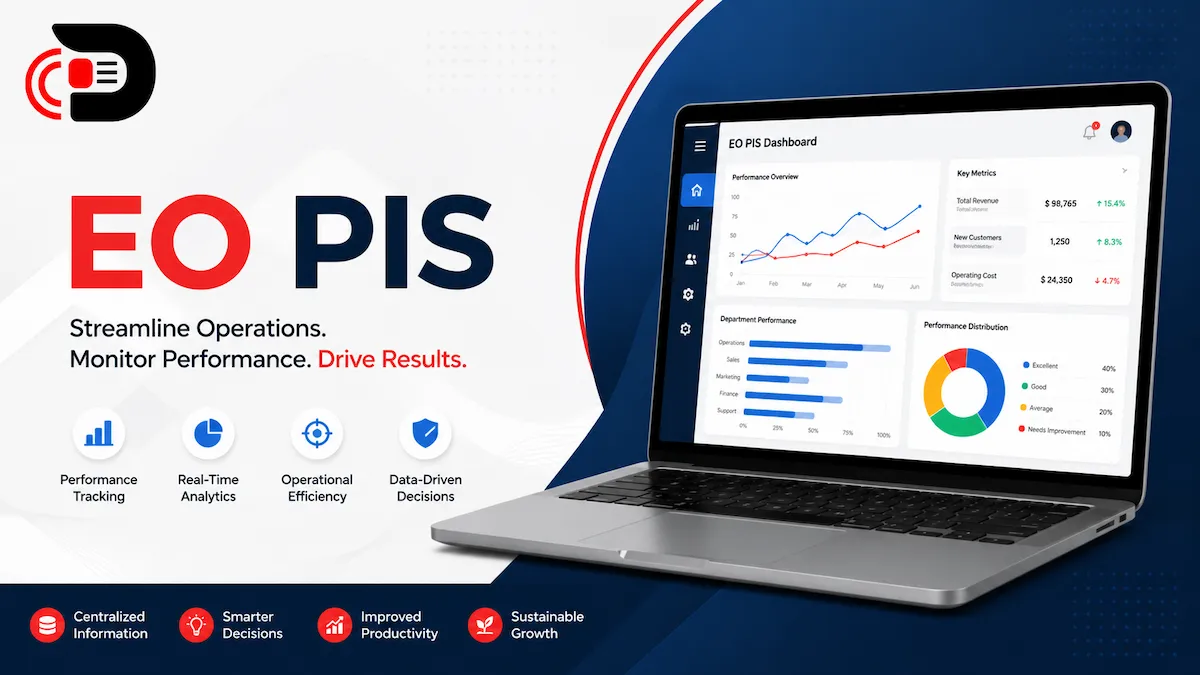
In most professional contexts, the EO PIS is associated with a structured system that combines operational processes, performance monitoring, and information management. Whether used in corporate environments, public organizations, or technology-driven operations, the primary goal remains the same: to turn data into actionable insights.
This guide explores what EO PIS means, how it works, its advantages, and why it is becoming increasingly relevant in today’s data-focused world.
What Is EO PIS?
The EO PIS is commonly interpreted as a framework that integrates operational activities with performance and information management systems. Although the exact meaning can vary by industry, the concept generally revolves around collecting, organizing, analyzing, and presenting critical operational data.
Instead of relying on separate spreadsheets, disconnected reports, or manual tracking methods, the EO PIS provides a centralized approach to monitoring organizational performance.
At its core, EO PIS helps organizations answer important questions, such as:
- Are the business objectives being achieved?
- Which processes performed well?
- Where do inefficiencies occur?
- What decisions should the leadership make next?
By providing visibility into operations, EO PIS supports faster and more informed decision making.
Why EO PIS Matters
Modern organizations generate enormous amounts of data daily. Sales figures, customer feedback, operational metrics, financial reports, and employee performance data all contribute to the overall picture.
Without a structured system, such information often remains fragmented.
EO PIS helps bridge this gap by creating a unified environment where data can be monitored and evaluated consistently.
Key Reasons Organizations Adopt EO PIS
- Improved operational visibility
- Better strategic planning
- Faster reporting processes
- Enhanced accountability
- More accurate performance measurement
- Reduced manual data handling
As businesses continue their digital transformation efforts, systems such as EO PIS are becoming increasingly valuable.
How EO PIS Works
The EO PIS framework typically follows a straightforward process.
1. Data Collection
Information was gathered from multiple sources, including:
- Internal databases
- Customer management systems
- Financial software
- Operational platforms
- Employee performance tools
2. Data Processing
The collected information was cleaned, organized, and standardized to ensure accuracy.
3. Performance Monitoring
Key performance indicators (KPIs) are tracked and compared with predefined goals.
Examples include:
- Revenue growth
- Customer retention rates
- Operational efficiency
- Project completion rates
- Employee productivity metrics
4. Reporting and Analysis
The system generates reports, dashboards, and visualizations that help stakeholders understand the performance trends.
5. Decision Support
Managers and executives can use these insights to make strategic and operational decisions.
Major Benefits of EO PIS
Improved Decision-Making
One of the strongest advantages of EO PIS is its ability to transform raw data into meaningful insights. Leaders can quickly identify opportunities and challenges instead of relying on assumptions.
Increased Efficiency
Automated reporting and centralized data management reduce administrative workloads and eliminate many manual processes.
Better Transparency
When everyone has access to consistent performance data, accountability improves across all departments.
Enhanced Strategic Alignment
The EO PIS helps ensure that daily activities support broader organizational goals.
Risk Reduction
Organizations can detect performance issues earlier, allowing corrective actions before problems become serious.
Common Applications of EO PIS
The EO PIS can be applied across many industries.
Business Operations
Companies use EO PIS to monitor the following:
- Production performance
- Sales activities
- Customer service metrics
- Financial outcomes
Government Agencies
Public organizations often use similar systems to track programs, budgets, and the effectiveness of service delivery.
Healthcare
Hospitals and healthcare providers can monitor their operational performance, patient outcomes, and resource utilization.
Education
Educational institutions use performance information systems to evaluate student success, faculty performance, and their institutional objectives.
Manufacturing
Manufacturers rely on performance monitoring systems to improve productivity, reduce waste, and maintain quality.
EO PIS and Digital Transformation
Digital transformation continues to reshape organizational operations.
Businesses are moving away from static reports and adopting real-time dashboards that provide instant access to performance data.
The EO PIS plays an important role in this shift by:
- Integrating data from multiple systems
- Supporting real-time monitoring
- Improving collaboration
- Enhancing forecasting capabilities
- Enabling data-driven leadership
Organizations that successfully leverage information often gain a competitive advantage over those that rely on outdated reporting methods.
Challenges of Implementing EO PIS
While EO PIS offers significant benefits, its implementation requires careful planning.
Data Quality Issues
Poor-quality data can lead to inaccurate reports and ineffective decision-making.
Employee Adoption
Staff may require training to fully utilize the systems.
Integration Complexity
Combining data from multiple platforms is technically challenging.
Ongoing Maintenance
Regular updates and monitoring are necessary to keep the system effective.
Organizations that address these challenges early on are more likely to achieve long-term success.
Future Trends in EO PIS
The future of EO PIS is closely linked to advances in analytics and business intelligence.
Several trends have shaped its evolution:
Real-Time Analytics
Organizations increasingly expect instant access to operational data.
Predictive Forecasting
Advanced analytics help predict future outcomes rather than simply reporting past performances.
Cloud-Based Platforms
Cloud technology improves accessibility, scalability, and collaboration.
Advanced Visualization
Interactive dashboards make complex information easier to comprehend.
Greater Automation
Automated data collection and reporting reduce manual effort and improve accuracy.
As technology continues to evolve, EO PIS systems are expected to become more intelligent and user-friendly.
FAQs
1. What does EO PIS mean?
EO PIS can have different meanings depending on the industry; however, it generally refers to a system that combines operational management, performance monitoring, and information processing to support decision-making.
2. What is the primary purpose of the EO PIS?
The primary purpose is to collect, analyze, and present organizational data in a way that helps leaders improve their performance and make informed decisions.
3. Who uses EO PIS?
EO PIS frameworks are commonly used by businesses, government agencies, healthcare organizations, educational institutions, and manufacturers.
4. How does the EO PIS improve efficiency?
It automates reporting, centralizes information, reduces manual processes, and provides faster access to performance insights.
5. Is EO PIS only for large organizations?
No. Small and medium-sized businesses can also benefit from EO PIS by improving their visibility into operations and supporting strategic growth.
Conclusion
The EO PIS represents a modern approach to managing performance and information within an organization. By bringing operational data together in a structured framework, leaders can gain clarity, improve efficiency, and make smarter decisions.
As organizations face increasing pressure to operate more effectively, systems such as EO PIS provide a practical solution for transforming data into meaningful action. Whether used in business, government, healthcare, or education, the value of accurate information and performance visibility continues to grow.
Organizations that embrace EO PIS and invest in strong data management practices are likely to be better positioned for long-term success in an increasingly competitive and data-driven environment.