
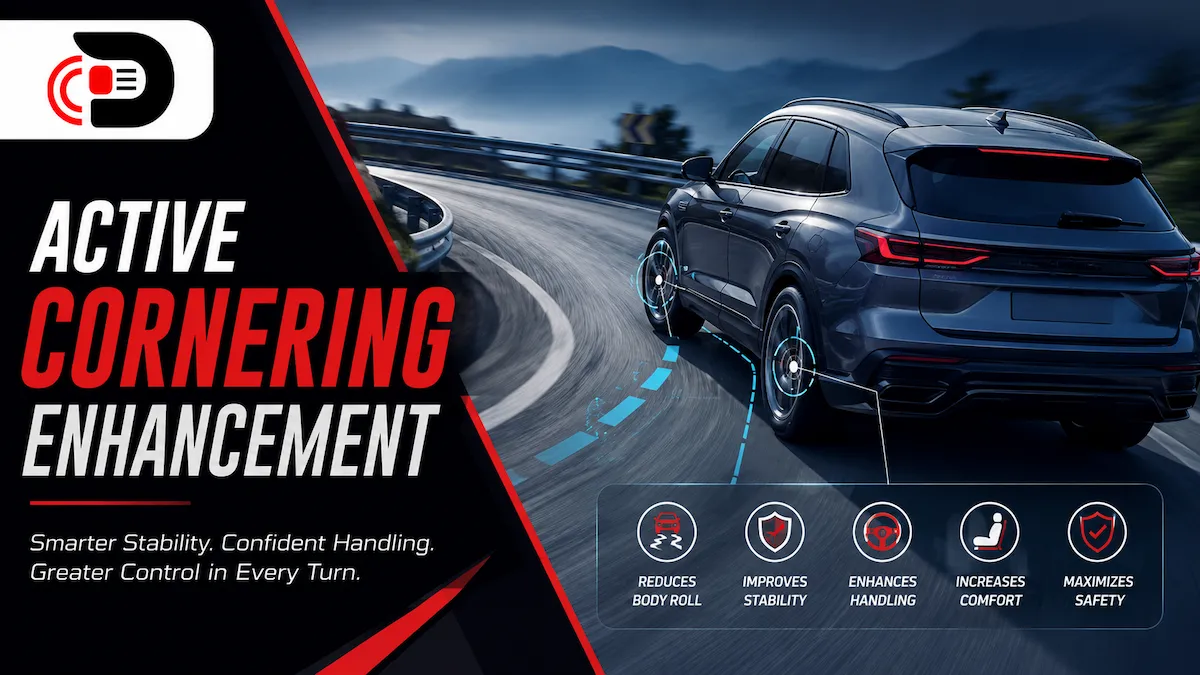

Many modern cars have lots of different types of technology and features intended to improve functionality and performance in terms of comfort, safety, or efficiency, and one of these technologies is Active Cornering Enhancement (ACE). This feature allows the car to have “improved handling and stability” when “navigating curves, corners, and rough roads”.
Whether it is when “driving on a winding road, executing a quick lane change, or pulling out of a parking garage”, the ACE feature can be applied and utilized in order to ensure the safety and comfort of the driver and their passengers. In this article, I will be discussing the topic of the Active Cornering Enhancement feature, including the reasoning behind its usage, benefits, examples, and its overall importance.
What Is Active Cornering Enhancement?
Active Cornering Enhancement is a technology used in cars which “helps reduce roll” and is a feature that improves the “handling and stability” when “navigating curves, corners, and rough roads”. When a car begins to tip or leans during a turn, the car is experiencing what is known as roll and Active Cornering Enhancement is used to address this issue. It can be noted that traditionally, “suspension systems utilize passive anti-roll bars and shock absorbers to help control roll” but ACE does so using a more advanced method.
The result is:
- Improved vehicle stability
- Better cornering performance
- Enhanced passenger comfort
- Increased driver confidence
- Greater control during emergency maneuvers
The technology became particularly well known through certain luxury SUVs and premium vehicles, where maintaining both comfort and handling was a major engineering challenge.
How Active Cornering Enhancement Works
At its core, Active Cornering Enhancement uses sensors, hydraulic systems, or electronic actuators to monitor and respond to vehicle movement in real time.
Key Components
The system typically includes:
- Vehicle motion sensors
- Steering angle sensors
- Hydraulic actuators or electronic control units
- Anti-roll bars
- Suspension control modules
Real-Time Monitoring
Sensors continuously track factors such as:
- Vehicle speed
- Steering input
- Lateral acceleration
- Suspension movement
When the vehicle enters a corner, the system detects the shift in weight and automatically applies corrective force to reduce body roll.
Additive Manufacturing News: The Innovations Reshaping Modern Manufacturing
Counteracting Lean
Instead of allowing the vehicle to tilt significantly, Active Cornering Enhancement applies pressure through hydraulic or electronic mechanisms to keep the vehicle more level.
This balancing effect improves tire contact with the road surface, which is crucial for traction and stability.
Why Body Roll Matters
Many drivers underestimate the impact of body roll.
Excessive leaning can:
- Reduce handling precision
- Affect passenger comfort
- Increase driver fatigue
- Reduce tire grip
- Create a feeling of instability
While body roll is a natural part of vehicle dynamics, minimizing it can dramatically improve overall driving performance.
For larger vehicles such as SUVs, crossovers, and pickup trucks, controlling body roll is especially important due to their higher center of gravity.
Benefits of Active Cornering Enhancement
Improved Stability
Probably the most obvious benefit is that the vehicle remains stable during turns.
This makes it easier to maneuver and generally improves the driving experience behind the wheel.
Better Driver Confidence
Most drivers tend to have more confidence with a well performing car.
It’s reassuring to know that the vehicle will respond to your input on the road.
Especially with the removal of body roll, drivers can feel more confident on bends and in corners.
Improved Passenger Comfort
Passengers are often more affected by the motion of a vehicle than drivers.
They tend to feel any body roll much more strongly. This means that they are less likely to enjoy sitting in a car that has a lot of side to side movement.
Improved Tire Performance
When tires maintain better contact with the road surface, they can provide:
- Stronger grip
- More consistent braking
- Better acceleration traction
- Improved cornering capability
Greater Safety
Although Active Cornering Enhancement is not a replacement for safe driving habits, it can support vehicle stability during sudden evasive maneuvers and emergency situations.
Active Cornering Enhancement vs Traditional Suspension Systems
Traditional Suspension
Traditional systems use fixed mechanical components.
Advantages include:
- Simplicity
- Lower maintenance costs
- Reduced complexity
However, they cannot actively adapt to changing driving conditions.
Active Cornering Enhancement
ACE systems continuously adjust vehicle behavior.
Advantages include:
- Dynamic response
- Reduced body roll
- Improved handling
- Better comfort
The trade-off is increased complexity and potentially higher repair costs if major components fail.
Vehicles Commonly Equipped with Active Cornering Systems
Active Cornering Enhancement is most often found in:
- Luxury SUVs
- Premium sedans
- Performance vehicles
- Off-road capable SUVs
Manufacturers have developed various versions under different brand names. While the technology differs slightly between companies, the overall goal remains the same: improving stability and handling.
The Evolution of Active Suspension Technology
The automotive industry has moved rapidly toward smarter chassis systems over the past decade.
Recent developments include:
Electronic Active Roll Control
Many modern vehicles now use fully electronic actuators instead of hydraulic systems.
These systems can respond faster and often improve efficiency.
Integration with Driver Assistance Features
Advanced stability systems increasingly work alongside:
- Electronic Stability Control (ESC)
- Adaptive suspension systems
- Traction control systems
- Advanced driver-assistance technologies
Electric Vehicle Applications
Electric vehicles are creating new opportunities for active suspension technologies.
Because EV batteries add significant weight to the vehicle floor, manufacturers are developing sophisticated suspension solutions to maximize ride comfort and handling.
Common Signs of Active Cornering Enhancement Problems
Like any mechanical or electronic system, Active Cornering Enhancement can develop faults over time.
Potential warning signs include:
- Increased body roll
- Suspension warning lights
- Uneven handling
- Hydraulic fluid leaks (on hydraulic systems)
- Unusual noises from suspension components
If these symptoms appear, professional diagnosis is recommended to prevent further issues.
Maintenance Considerations
Proper maintenance helps ensure the system continues operating effectively.
Recommended practices include:
- Regular suspension inspections
- Monitoring hydraulic fluid levels where applicable
- Addressing warning lights promptly
- Following manufacturer service intervals
- Checking sensors and electronic control systems during routine maintenance
Preventive care is generally less expensive than repairing major suspension components after failure.
Is Active Cornering Enhancement Worth It?
For drivers who prioritize handling, comfort, and stability, the answer is often yes.
The technology offers noticeable benefits in everyday driving and becomes even more valuable when:
- Driving larger vehicles
- Frequently traveling on winding roads
- Towing trailers
- Carrying heavy loads
- Covering long distances
Many owners report that vehicles equipped with active suspension technologies feel more composed and controlled than comparable models using conventional suspension setups.
FAQs
1. What is Active Cornering Enhancement?
Active Cornering Enhancement is a technology that makes cars safer and more comfortable by reducing the roll of the vehicle when taking turns.
2. Is Active Cornering Enhancement the same as traction control?
No. Traction control is a function that prevents wheels from spinning, while Active Cornering Enhancement is a system that reduces body roll.
3. What cars have Active Cornering Enhancement?
Many luxury SUVs, premium sedans, performance cars, and some off-road vehicles have this technology.
4. Does Active Cornering Enhancement make a car safer?
Yes. Active Cornering Enhancement can improve safety by making the car more stable on the road.
5. Does Active Cornering Enhancement need maintenance?
Depending on the make and model of the car, Active Cornering Enhancement can require maintenance such as suspension and sensor checks.
Conclusion
Active Cornering Enhancement is a revolutionary technology that has been developed to improve car performance and comfort. By reducing body roll and improving stability, it makes driving safer and more enjoyable. Whether it’s in a luxury SUV, a premium sedan, or a performance car, Active Cornering Enhancement is sure to provide a better driving experience.