
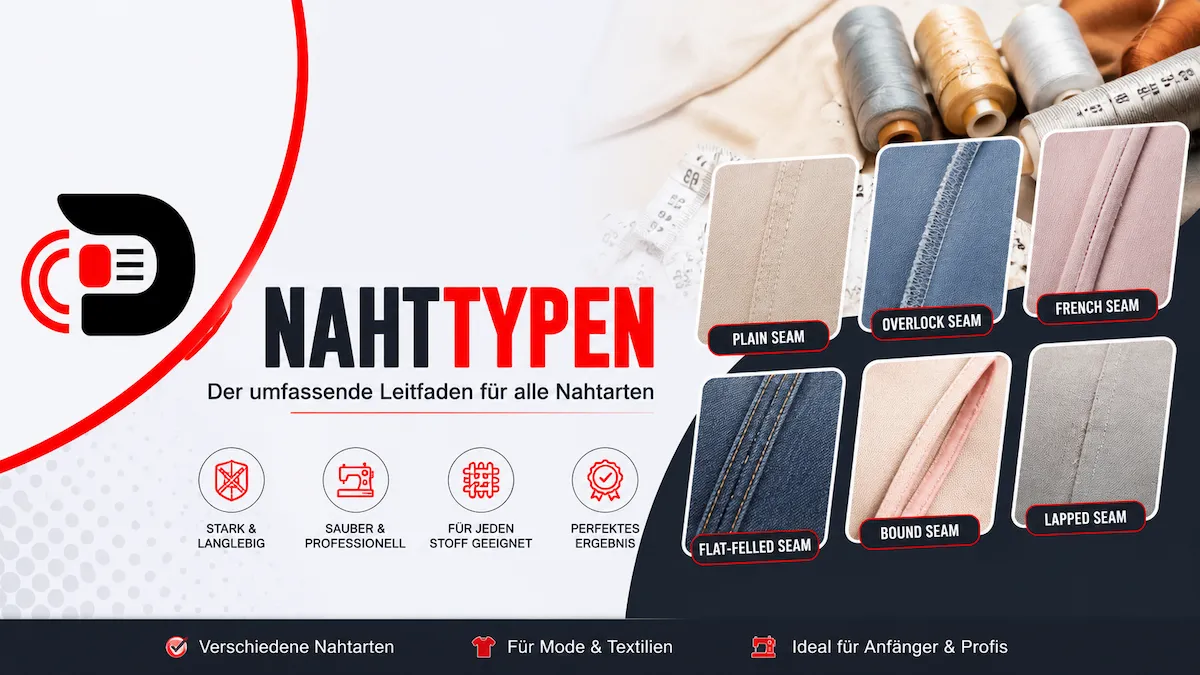

Whether you are a novice who has just learned to sew, a fashion student, or you are simply curious, there is no doubt that understanding nahttypen is vital. The term nahttypen (seam types) is the German word for seam types.
Seams are one of the most critical aspects of sewing. Most clothing items, from simple t-shirts to outdoor jackets and haute couture are inseparable from seams. Moreover, seams have a significant impact on the clothing’s comfort, durability, appearance, and even cost.
In this article, we will discuss the most common nahttypen, their pros and cons, application areas, and much more.
What Are Nahttypen?
Let’s talk about what seams are in the first place. Seams are a connection between two fabric parts or between different materials. Different types of seams have been developed to address specific needs.
Depending on their design, seams may vary greatly in how they look, feel, or behave. A lot of factors are considered when choosing a particular seam type, such as desired durability, stretch, appearance, and others. A properly chosen seam ensures the clothing’s long life and comfort, while an improperly chosen one leads to discomfort and tears.
Why Seam Types Matter
Many people focus on fabric quality when evaluating clothing, but seams are equally important.
A well-chosen seam can:
- Improve garment durability
- Increase comfort during wear
- Enhance visual appeal
- Prevent fabric fraying
- Support stretch and movement
- Reduce manufacturing defects
In modern apparel production, seam engineering has become a significant part of product development, especially for sportswear, workwear, and technical textiles.
Common Nahttypen and Their Uses
1. Plain Seam
The plain seam is the most basic and widely used seam type.
It is created by placing two pieces of fabric together and stitching them along the edge.
Advantages:
- Easy to sew
- Suitable for most fabrics
- Efficient for mass production
Common Uses:
- Shirts
- Dresses
- Skirts
- Lightweight garments
Although simple, plain seams often require additional finishing to prevent fraying.
2. French Seam
A French seam encloses the raw fabric edges within the seam itself.
This creates a clean, professional finish both inside and outside the garment.
Advantages:
- Elegant appearance
- Prevents fraying
- Ideal for delicate fabrics
Common Uses:
- Silk blouses
- Lingerie
- Chiffon garments
- Luxury apparel
French seams are popular in high-end fashion because of their neat construction.
3. Flat-Felled Seam
The flat-felled seam is known for exceptional durability.
The seam allowances are folded and stitched down, creating a strong and tidy finish.
Advantages:
- Extremely durable
- Comfortable against the skin
- No exposed raw edges
Common Uses:
- Jeans
- Workwear
- Outdoor clothing
- Men’s shirts
If you’ve ever examined the side seams of denim jeans, you’ve likely seen a flat-felled seam.
4. Overlocked Seam
An overlocked seam uses a serger machine to stitch and finish edges simultaneously.
This seam type dominates modern garment manufacturing.
Advantages:
- Fast production
- Stretch-friendly
- Prevents fabric unraveling
Common Uses:
- T-shirts
- Activewear
- Knit garments
- Casual clothing
The widespread use of knit fabrics has increased the popularity of overlocked seams worldwide.
5. Bound Seam
A bound seam covers raw edges with a separate strip of fabric or binding material.
This creates a clean and decorative finish.
Advantages:
- Attractive appearance
- Strong edge protection
- Professional finishing
Common Uses:
- Jackets
- Unlined garments
- Home textiles
- Premium clothing
6. Lapped Seam
In a lapped seam, one piece of fabric overlaps another before stitching.
This technique is often used when strength is required.
Advantages:
- High durability
- Suitable for thick fabrics
- Decorative possibilities
Common Uses:
- Leather goods
- Sports equipment
- Heavy-duty textiles
Wollmatten Explained Benefits, Uses, and Why Natural Wool Mats Are Making a Comeback
Specialized Seam Types in Modern Manufacturing
Flatlock Seam
Flatlock seams create a nearly flat join between fabric pieces.
They are commonly found in athletic clothing because they minimize skin irritation.
Common Applications:
- Compression wear
- Running apparel
- Yoga clothing
- Base layers
Welded Seams
Instead of stitching, welded seams use heat, adhesives, or ultrasonic technology.
These seams are increasingly common in technical garments.
Benefits:
- Water resistance
- Smooth appearance
- Reduced bulk
Used In:
- Rain jackets
- Waterproof gear
- Performance apparel
Decorative Seams
Some nahttypen are designed primarily for aesthetics rather than structural support.
Examples include:
- Topstitched seams
- Piped seams
- Embellished seams
- Contrast-stitched seams
Fashion designers frequently use these techniques to create distinctive visual effects.
Choosing the Right Nahttypen
Selecting the correct seam depends on several factors.
Fabric Type
Different fabrics require different seam constructions.
For example:
- Silk works well with French seams.
- Denim benefits from flat-felled seams.
- Stretch fabrics often use overlocked seams.
Intended Use
A garment’s purpose influences seam selection.
Sportswear requires flexibility, while workwear demands strength.
Appearance
Visible seams contribute to a garment’s style. Designers often choose seam types that complement the overall look.
Durability Requirements
Products exposed to stress need reinforced seam constructions to ensure long-term performance.
Current Trends in Seam Technology
The textile industry continues to innovate.
Recent developments include:
- Seamless garment construction
- Ultrasonic bonding technology
- Sustainable sewing techniques
- Recycled thread materials
- Smart textile integration
Athletic brands and outdoor clothing manufacturers are investing heavily in advanced seam technologies to improve comfort and performance.
As sustainability becomes a priority, manufacturers are also exploring seam designs that support easier garment repair and recycling.
Common Mistakes When Selecting Seam Types
Even experienced sewers occasionally choose the wrong seam.
Some common mistakes include:
- Using plain seams on high-stress areas
- Ignoring fabric stretch requirements
- Choosing decorative seams for structural purposes
- Overlooking seam bulk in lightweight fabrics
- Failing to finish raw edges properly
Understanding seam characteristics helps avoid these issues.
The Role of Nahttypen in Garment Quality
Consumers often judge clothing quality by fabric, but seams reveal just as much about craftsmanship.
High-quality garments typically feature:
- Consistent stitch length
- Clean seam finishes
- Appropriate seam selection
- Strong reinforcement at stress points
- Professional construction techniques
A carefully selected seam improves both the appearance and lifespan of a product.
FAQs
1. What is the meaning of the term nahttypen?
The term nahttypen means nothing else but seam types. Seam types are ways of joining two pieces of fabric.
2. Which seams are the strongest?
Flat-felled seams are some of the strongest seams and are used to make jeans and workwear.
3. Which seams are the best for sensitive fabrics?
French seams are the best option for sensitive fabrics.
4. Why are seams such a widespread occurrence?
This kind of seam is very quick and straightforward to make, it prevents raveling, and it is appropriate for stretchy fabrics. These advantages make overlocked seams popular in modern clothing production.
5. Are there alternative ways of making seams?
Welded seams are an alternative to traditional ways of making seams. However, they are not used in all kinds of clothing production. They are only applied when garments should be waterproof or have special properties.
Conclusion
When you learn about nahttypen , you get an understanding of why clothes are made the way they are and what benefits specific kinds of stitches offer. You realize that there is a tremendous variety of seams, from simple plain ones to complicated flat-felled ones, and every type has its advantages. This knowledge may be helpful in case you want to sew your own clothes, study fashion designing, or simply choose the clothes you buy. After all, it is vital to know the pros and cons of various ways of making seams in order to acquire high-quality garments that will last for a long time.