
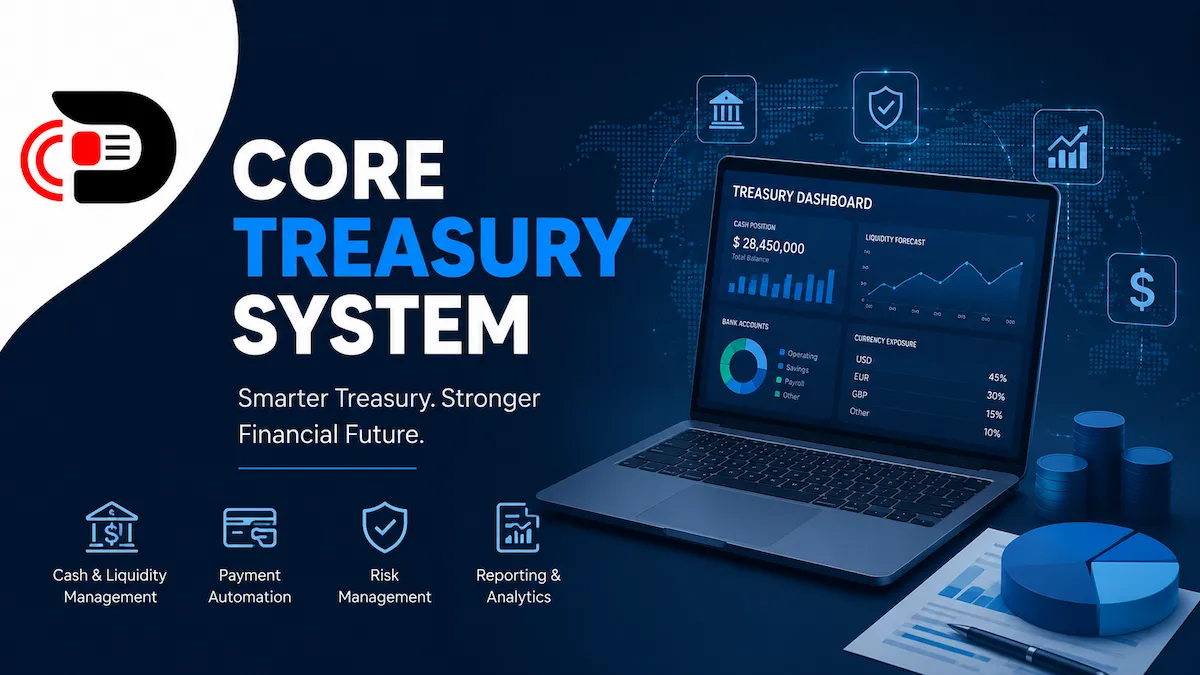

Managing corporate finances has become far more complex than it was a decade ago. Organizations now deal with multiple bank accounts, cross-border transactions, fluctuating currencies, regulatory requirements, and growing demands for real-time financial visibility. Many businesses rely on a core treasury system to handle these challenges efficiently.
A core treasury system serves as the central platform for managing an organization’s treasury operations. It helps finance teams monitor cash positions, manage liquidity, track financial risks, automate payments, and make better financial decisions.
As businesses continue to embrace digital transformation, treasury technology is evolving from a back-office function into a strategic tool that supports growth, resilience, and financial stability of the organization.
What is a core treasury system?
A core treasury system is a specialized software platform designed to centralize and automate treasury management activities within an organization.
It acts as a single source of truth for treasury operations by integrating financial data from banks, accounting systems, enterprise resource planning (ERP) platforms, and payment networks.
Rather than relying on spreadsheets and manual processes, treasury teams can use a core treasury system to gain real-time visibility into cash flows, investments, debt obligations and financial risks.
In Simple Terms
Consider a core treasury system as the control center for an organization’s finances. It helps treasury professionals answer critical questions, such as:
- How much cash is available today?
- Which accounts require funding?
- What currency risks are there?
- Are there any upcoming debt payments?
- How can excess cash be invested efficiently?
Why Core Treasury Systems Matter
Treasury management directly affects an organization’s financial health. Poor visibility of cash positions can lead to liquidity shortages, unnecessary borrowing, and missed investment opportunities.
A core treasury system helps organizations to:
- Improve cash forecasting accuracy
- Reduce manual workload
- Strengthen financial controls
- Enhance risk management
- Support regulatory compliance
- Increase operational efficiency
In today’s fast-moving business environment, having timely financial information is often the difference between proactive decision-making and reactive problem-solving.
Key Functions of a Core Treasury System
Cash and Liquidity Management
Cash management is one of the most important responsibilities of any treasury department in a company.
A core treasury system enables businesses to do the following:
- Consolidate bank account balances
- Monitor cash positions globally
- Forecast future cash flows
- Optimize liquidity across entities
For example, a multinational company may hold funds in dozens of countries worldwide. A treasury system provides a centralized view of all available cash, helping finance teams to allocate resources more effectively.
Payment Management
Modern treasury systems streamline payment processes by automating payment initiation, approval workflows and bank connectivity.
Benefits include:
- Faster payment execution
- Reduced operational errors
- Better fraud controls
- Enhanced audit trails
Automation also helps organizations maintain consistency across large payment volumes.
Risk Management
Financial risk can significantly affect profitability.
A core treasury system helps organizations monitor and manage the following:
- Foreign exchange risk
- Interest rate risk
- Commodity price risk
- Counterparty risk
Treasury teams can use built-in analytics to evaluate exposure and implement hedging strategies when necessary.
Debt and Investment Management
Organizations often manage loans, bonds, credit facilities, and investment portfolios.
A treasury platform can do the following:
- Track debt maturities
- Monitor interest payments
- Manage investment schedules
- Evaluate funding requirements
This visibility supports smarter financing decisions and improves the capital allocation.
Bank Relationship Management
Many businesses maintain relationships with several financial institutions.
A core treasury system can centralize the following:
- Bank account information
- Banking fees
- Credit facilities
- Service agreements
This allows treasury teams to evaluate banking performance and negotiate more favorable terms for the bank.
Core Features of a Modern Treasury System
Treasury solutions offer a wide range of capabilities.
Real-Time Data Integration
Modern platforms are directly connected to:
- Banks
- ERP systems
- Accounting software
- Payment gateways
This integration eliminates data silos and improves their visibility.
Dashboards and Reporting
Executives and treasury professionals require quick access to actionable insights.
Advanced dashboards often display the following:
- Cash positions
- Liquidity forecasts
- Currency exposures
- Investment performance
- Debt obligations
Interactive reporting allows users to analyze trends and identify potential risks.
Workflow Automation
Automation reduces the number of repetitive manual tasks.
Examples include:
- Payment approvals
- Bank reconciliations
- Cash forecasting updates
- Compliance checks
By automating routine processes, treasury teams can focus on strategic initiatives.
Security and Compliance Controls
Financial data are highly sensitive.
Core treasury systems typically include the following:
- Role-based access controls
- Multi-factor authentication
- Audit logs
- Regulatory reporting tools
These features help organizations to maintain strong governance standards.
Benefits of Implementing a Core Treasury System
Improved Visibility
Treasury teams gain a comprehensive view of the financial position across the organization.
This visibility supports better planning and faster decision-making processes.
Enhanced Efficiency
Manual spreadsheets and fragmented systems often consume significant amounts of time and resources.
Automation can dramatically reduce the following:
- Data entry tasks
- Reporting preparation
- Reconciliation efforts
Better Risk Management
Real-time monitoring enables organizations to identify and address risks before they become significant problems.
Stronger Compliance
Regulatory requirements are evolving globally.
A centralized treasury system helps organizations maintain accurate records and meet their reporting obligations more efficiently.
Cost Savings
Improved cash utilization, reduced operational errors, and optimized banking relationships can lead to substantial, long-term savings.
Industries That Use Core Treasury Systems
Treasury technology is valuable in many sectors.
Banking and Financial Services
Financial institutions rely on treasury systems to manage their liquidity, funding, and regulatory requirements.
Manufacturing
Manufacturers often deal with complex supply chains, international payments, and foreign currency exposures.
Retail and E-Commerce
Retail companies use treasury systems to manage large transaction volumes and seasonal cash flow changes.
Healthcare
Healthcare organizations require accurate financial oversight to manage their operating expenses, investments, and funding requirements.
Energy and Utilities
These sectors often face commodity price volatility and significant capital expenditure planning challenges.
Challenges During Implementation
Although the benefits are significant, implementing a core treasury system requires careful planning.
Common challenges include the following:
Data Quality Issues
Inaccurate or incomplete financial data can reduce system effectiveness.
Organizations should clean and standardize their data before migration.
Integration Complexity
Connecting multiple banking partners and internal systems is technically demanding.
Change Management
Employees may require training and support to adapt to new workflows and technologies.
Budget Considerations
Implementation costs can vary depending on the system complexity, customization requirements, and organizational size.
Emerging Trends in Treasury Technology
Treasury management is evolving rapidly.
Cloud-Based Treasury Platforms
Cloud deployment is becoming increasingly popular because of the following reasons:
- Lower infrastructure costs
- Faster implementation
- Greater scalability
- Automatic software updates
Real-Time Payments
As payment networks modernize, treasury teams gain access to faster transaction processing and improved cash visibility.
Advanced Analytics
Modern treasury systems increasingly provide predictive insights that help organizations anticipate their cash needs and evaluate financial scenarios.
API Connectivity
Application Programming Interfaces (APIs) enable direct communication between banks and treasury systems, improving data accuracy and reducing delays.
Increased Focus on Cybersecurity
With financial fraud and cyber threats on the rise, treasury technology providers continue to strengthen their security frameworks and monitoring capabilities.
Choosing the Right Core Treasury System
Organizations should evaluate several factors before selecting a solution.
The key considerations are as follows:
- Scalability
- Integration capabilities
- Security standards
- User experience
- Reporting functionality
- Vendor reputation
- Customer support
- Regulatory compliance features
Successful implementation begins with an understanding of current treasury challenges and future business requirements.
FAQs
1. What is a core treasury system
A core treasury system is a software platform that centralizes and automates treasury operations, such as cash management, liquidity monitoring, payment processing, risk management, and financial reporting.
2. Who uses core treasury systems?
Core treasury systems are commonly used by large corporations, banks, financial institutions, manufacturers, retailers, healthcare organizations, and multinational enterprises.
3. What are the main benefits of a core treasury system?
The key benefits include improved cash visibility, operational efficiency, risk management, compliance support, automation, and better financial decision-making.
4. How does a core treasury system improve cash management?
It provides real-time visibility into bank balances, cash flows, and liquidity positions, helping organizations forecast their cash needs and optimize available funds.
5. Is a core treasury system suitable for small businesses
While traditionally used by larger organizations, many cloud-based treasury solutions now offer scalable options that can support mid-sized and growing companies.
Conclusion
A core treasury system is an essential component of modern financial management. By centralizing cash, payments, liquidity, debt, investments, and risk management activities, it provides organizations with the visibility and control required to navigate an increasingly complex financial landscape.
As businesses expand globally and financial operations become more interconnected, treasury technology is no longer merely an operational tool. It has evolved into a strategic asset that helps organizations improve efficiency, strengthen financial resilience, manage risks, and make smarter decisions. Companies that invest in the right treasury infrastructure are often better positioned to adapt to changing market conditions and to support long-term growth.