
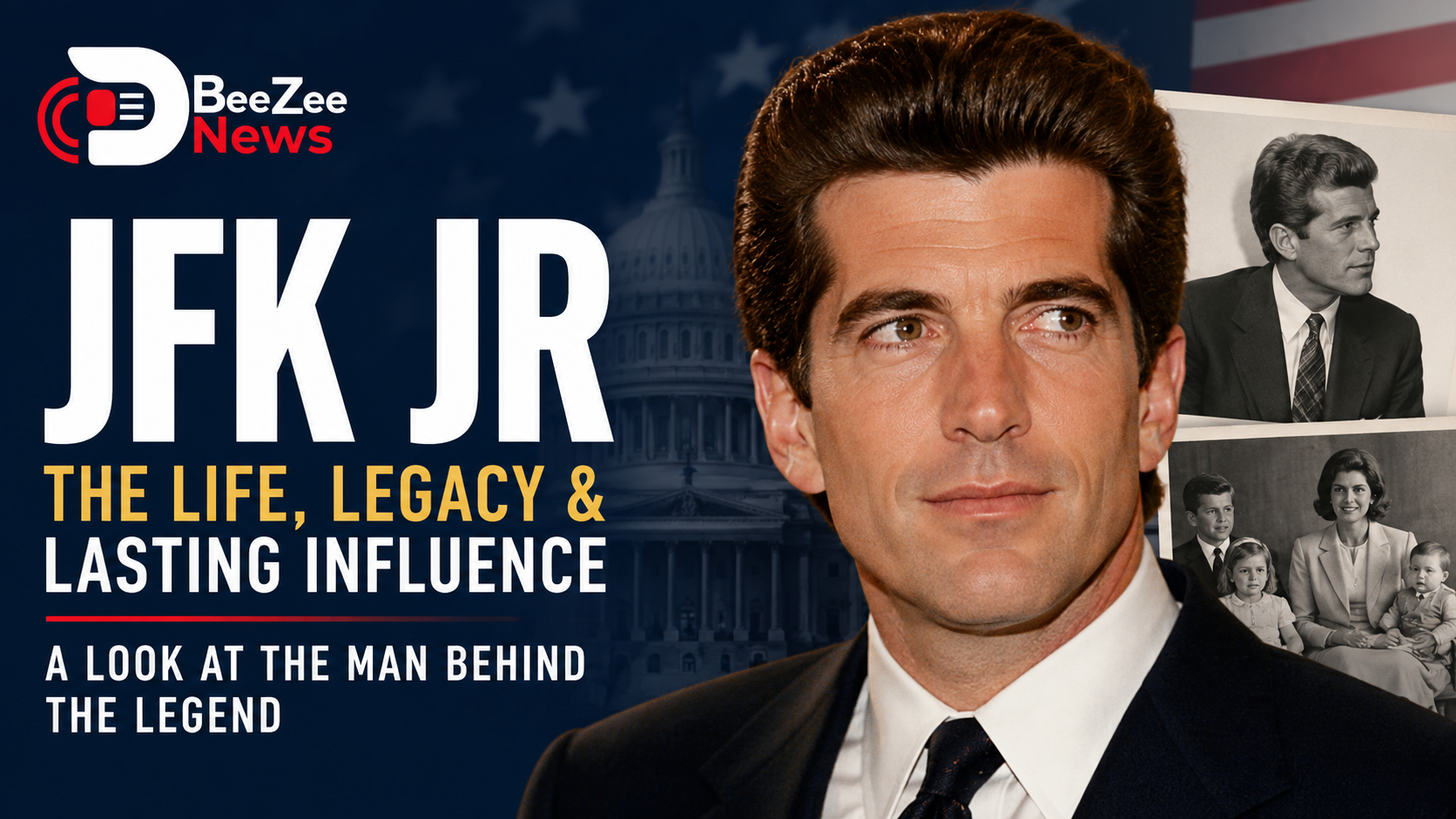

Few American public figures have captured the public imagination quite like JFK Jr. Born into one of the country’s most recognized political families, John F. Kennedy Jr. lived much of his life under an extraordinary spotlight. While many remember him as the son of President John F. Kennedy, his own achievements as a lawyer, magazine publisher, and advocate for civic engagement deserve equal attention.
Decades after his untimely death, JFK Jr. continues to inspire discussions about leadership, public service, media, and American history. His story is one of opportunity, responsibility, ambition, and resilience.
Who Was JFK Jr.?
JFK Jr., whose full name was John Fitzgerald Kennedy Jr., was born on November 25, 1960, in Washington, D.C. He was the son of President John F. Kennedy and First Lady Jacqueline Kennedy.
At just three years old, he became part of one of the most unforgettable moments in American history when he saluted his father’s casket during the presidential funeral. That image remains one of the most iconic photographs ever captured.
Despite growing up in the public eye, JFK Jr. sought to build a meaningful career independent of his family’s political legacy.
Early Life and Education
Growing up was anything but ordinary for JFK Jr. Following President Kennedy’s assassination, Jacqueline Kennedy worked hard to provide as normal a childhood as possible for her children.
He attended prestigious schools before graduating from:
- Brown University
- New York University School of Law
Rather than immediately entering politics, JFK Jr. chose to study law and later became a practicing attorney.
His educational journey reflected his desire to establish credibility through personal achievement rather than relying solely on his famous family name.
Career as a Lawyer
After earning his law degree, JFK Jr. worked as an assistant district attorney in New York.
Although many expected him to launch a political career, he initially focused on public service through the legal profession.
His colleagues often described JFK Jr. as hardworking, respectful, and committed to justice despite intense public attention.
The Creation of George Magazine
One of JFK Jr.‘s most influential accomplishments came in 1995 when he founded George Magazine.
The publication blended politics with popular culture, making government and public affairs more accessible to younger audiences.
George Magazine introduced a fresh editorial style by featuring:
- Political leaders
- Celebrities
- Social issues
- Election coverage
- Public policy discussions
The innovative concept helped redefine political journalism during the 1990s.
Why George Magazine Was Different
Unlike traditional political publications, George Magazine presented politics in a more engaging and approachable way.
Key features included:
- Modern visual design
- Celebrity interviews
- In-depth political reporting
- Cultural commentary
- Election analysis
Through the magazine, JFK Jr. encouraged greater civic participation and public interest in government.
Public Image
Throughout his adult life, JFK Jr. became one of America’s most admired public figures.
He was frequently recognized for his:
- Intelligence
- Professionalism
- Charisma
- Civic-minded outlook
- Respectful leadership style
Although media attention often focused on his appearance and celebrity status, friends and colleagues consistently emphasized his dedication to meaningful work.
Marriage to Carolyn Bessette
In 1996, JFK Jr. married Carolyn Bessette in a private ceremony.
Their relationship attracted widespread media coverage because both valued privacy despite intense public curiosity.
The couple attempted to maintain a relatively normal lifestyle while balancing constant attention from photographers and news organizations.
Aviation Interest
Flying became one of JFK Jr.‘s greatest personal interests.
He earned his pilot’s license and regularly flew small aircraft.
Like many aviation enthusiasts, he appreciated both the technical challenges and the freedom that flying offered.
The Tragic Plane Crash
On July 16, 1999, tragedy struck when the aircraft piloted by JFK Jr. crashed into the Atlantic Ocean near Martha’s Vineyard.
Also aboard were:
- Carolyn Bessette Kennedy
- Lauren Bessette
Investigations concluded that the accident resulted from pilot disorientation during nighttime flight over water under challenging visibility conditions.
The loss shocked the United States and generated worldwide headlines.
Public Reaction
Millions mourned the passing of JFK Jr.
Political leaders, journalists, and citizens remembered him not only because of his famous family but also because of his own accomplishments.
Many tributes highlighted:
- His optimism
- Dedication to public service
- Interest in civic education
- Respectful leadership
- Vision for political journalism
Legacy of JFK Jr.
Even decades later, JFK Jr. remains an influential figure in American culture.
His legacy includes:
Civic Engagement
George Magazine encouraged younger generations to become more involved in politics.
Public Service
His legal career demonstrated a commitment to justice rather than personal fame.
Media Innovation
He successfully combined politics and popular culture in a way that influenced future publications.
Inspiration
Many people continue to view JFK Jr. as an example of grace under public scrutiny.
Why People Still Search for JFK Jr.
Interest in JFK Jr. remains strong because of several reasons:
- Historical significance
- Kennedy family legacy
- George Magazine
- Political history
- American culture
- Documentary films
- Biography releases
- Public fascination with the Kennedy family
Each new documentary or anniversary introduces his story to another generation.
Lessons from JFK Jr.’s Life
Several meaningful lessons can be drawn from his journey:
- Build your own identity.
- Education creates lasting opportunities.
- Public service can take many forms.
- Innovation often comes from fresh perspectives.
- Leadership involves integrity and responsibility.
These principles continue to resonate with readers today.
JFK Jr. in Modern Culture
Books, documentaries, podcasts, and historical analyses continue exploring the life of JFK Jr.
His influence extends beyond politics into journalism, media studies, and leadership discussions.
Modern audiences appreciate his efforts to modernize political communication while remaining committed to civic responsibility.
FAQs
1. Who was JFK Jr.?
JFK Jr., or John F. Kennedy Jr., was the son of President John F. Kennedy. He was a lawyer, magazine publisher, and public figure.
2. What was George Magazine?
George Magazine was a political publication founded by JFK Jr. that combined politics with popular culture to engage broader audiences.
3. How did JFK Jr. die?
He died in a plane crash on July 16, 1999, while piloting a private aircraft near Martha’s Vineyard.
4. Was JFK Jr. involved in politics?
Although many expected him to enter politics, he primarily focused on law, publishing, and civic engagement.
5. Why is JFK Jr. still remembered today?
He is remembered for his contributions to journalism, public service, leadership, and the enduring legacy of the Kennedy family.
Conclusion
The story of JFK Jr. is about far more than family history. He built a respected career in law, introduced a fresh vision for political journalism through George Magazine, and inspired countless people through his commitment to public service. Although his life ended far too soon, his influence continues to shape conversations about leadership, civic responsibility, and American culture. Remembering JFK Jr. means recognizing both the challenges he faced and the positive legacy he left behind for future generations.